How to Make Better Decisions When You Only See Part of the Picture
Most companies operate successfully within a single industry for years — sometimes decades.
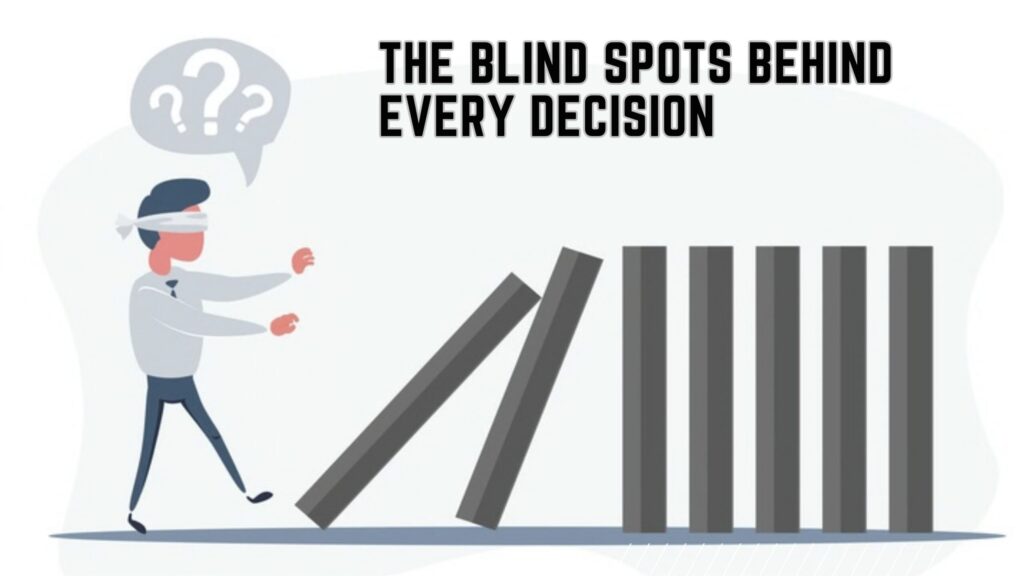
That focus creates expertise, efficiency, and speed. But it also creates something less visible: blind spots.
These blind spots are not the result of poor management. They are a natural consequence of operating inside the same rules, assumptions, and constraints for too long.
Every industry optimizes around its own constraints
Each industry develops its own reflexes about what matters most:
- In packaging and consumer goods, speed to market, cost pressure, and shelf impact dominate decisions.
- In automotive, durability, validation cycles, and failure prevention shape every choice.
- In pharmaceuticals, compliance, documentation, and risk avoidance are non-negotiable.
- In electronics, thermal limits, precision, and miniaturization define feasibility.
- In construction, lifecycle cost and long-term performance outweigh short-term optimization.
None of these perspectives is wrong. The problem arises when they are treated as complete.
Where decisions usually fail: the interfaces
In material-intensive projects, failures rarely happen at the core of an industry’s expertise.
They happen at the interfaces:
- Between design intent and real processing conditions.
- Between performance targets and regulatory acceptance.
- Between sustainability ambition and available infrastructure.
- Between short-term cost optimization and long-term risk.
These interfaces are precisely where industry-specific thinking is weakest — because they sit outside the daily field of view.
Why experience from other industries matters (even if you don’t operate in them)
You do not need to serve multiple industries to benefit from cross-industry insight.
What matters is recognizing that:
- Problems you face today may already be well understood elsewhere.
- Risks that seem theoretical in your sector may be operational realities in another.
- Validation standards, regulatory discipline, or lifecycle thinking from other industries can reveal gaps early — when there is still room to act.
Cross-industry experience adds value not by providing answers, but by asking better questions sooner.
A practical shift in decision-making
Organizations that consistently make better material decisions tend to adopt a few simple practices:
- They challenge assumptions that are taken for granted within their own industry.
- They involve perspectives that are not naturally present in the room.
- They evaluate material choices not only against today’s constraints, but against future scenarios.
- They look for partners who can surface risks they cannot easily see themselves.
This is not about changing your business model. It is about expanding your field of vision.
The takeaway
No company sees the full picture on its own. And no industry has a monopoly on good decision-making.
As complexity increases, competitive advantage comes from identifying blind spots early — before they turn into delays, redesigns, or missed opportunities.
In material decisions, the real value is not knowing more answers, but knowing which questions to ask before it’s too late.