Beyond Felt and Grease: How to Evaluate Anti-Squeak ABS for Automotive Interior Design

Beyond Felt and Grease: How to Evaluate Anti-Squeak ABS for Automotive Interior Design
In automotive interiors, a small squeak can create a large quality problem.
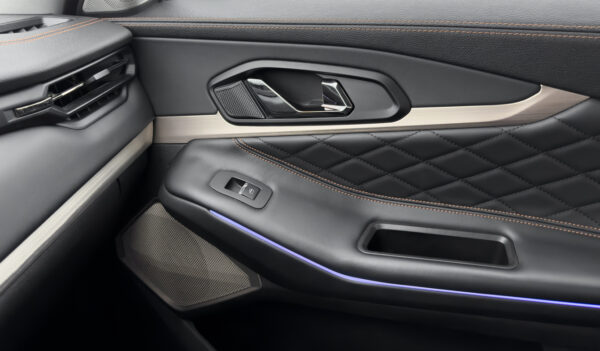
A cup holder, HVAC vent, center console, switch bezel, grab handle, or instrument panel component may function exactly as designed. Yet if plastic parts rub, slide, flex, or contact each other and create squeak noise, the customer may perceive the entire interior as lower quality.
This issue is becoming more important as vehicle cabins become quieter. Techno-UMG notes that, with the growing popularity of quiet hybrid and electric vehicles, eliminating annoying squeaking sounds in car interiors has become increasingly important (Techno-UMG America, n.d.-a). Recent research on friction-induced squeak noise in automotive interior plastics also shows that squeak behavior can depend on polymer pair, sliding speed, and system stiffness, which means squeak should be treated as a material-selection and validation issue rather than only a post-assembly fix (Yoon et al., 2025).
Traditional countermeasures often rely on felt tape, grease, coatings, or post-assembly adjustments. These methods can be effective, but they can also add process steps, create quality variation, and increase the risk of late-stage troubleshooting. Anti-squeak ABS materials, including HUSHLLOY®, offer a different approach: reducing squeak risk at the resin level.
What Causes Squeak Noise in Plastic Interior Parts?
Squeak noise is commonly associated with stick-slip behavior. Stick-slip occurs when two contacting surfaces alternate between sticking and slipping during relative motion. In plastic parts, this frictional instability can generate vibration, which can then become audible noise.
Bayani et al. (2021) describe squeak as a friction-induced high-frequency sound attributed to the stick-slip friction phenomenon. Their work also highlights that squeak and rattle sounds inside the vehicle cabin can create warranty-related concerns for automotive manufacturers, which is why preventive evaluation before late-stage development can be valuable.
Techno-UMG describes HUSHLLOY® as an anti-squeak material that contains a special polymer designed to reduce stick-slip tendency and minimize the risk of squeaky noise (Techno-UMG Europe GmbH, n.d.). This point is important because it positions HUSHLLOY® not as a surface treatment, but as a material-based countermeasure.
However, not every interior noise is the same. A squeak is typically related to sliding or frictional contact. A rattle is more often related to impact, looseness, clearance, or vibration between parts. Anti-squeak ABS can be valuable when the root cause is friction-related plastic-on-plastic noise. If the issue is caused by loose fasteners, excessive clearance, tolerance stack-up, or impact-based rattle, a material change alone may not solve the problem.

Why Felt and Grease Are Not Always the Best Long-Term Solution
Felt, tape, and grease are widely used because they are familiar and relatively easy to apply. They can reduce noise by separating contact surfaces or changing friction behavior.
However, these solutions can create practical challenges. Felt requires space, placement accuracy, and additional assembly labor. Grease can be sensitive to application amount, migration, contamination, dust attraction, and long-term durability. Manual or secondary operations can also introduce variation from part to part.
This is why a material-based solution can be attractive. Techno-UMG’s public HUSHLLOY®® presentation states that HUSHLLOY® dramatically reduces squeaky noise from plastic joints and can eliminate felts or greases applied to those parts (Techno-UMG Europe GmbH, n.d.). Techno-UMG America also states that HUSHLLOY® eliminates squeak and stick/slip noise in automotive interior parts, reducing the need for noise-reducing materials and offering easy integration with existing tooling (Techno-UMG America, n.d.-b).
For Tier 1 suppliers, the value is not simply “less noise.” The larger value may be process simplification, lower variation, fewer secondary operations, and a more robust design before mass production.
What Is Anti-Squeak ABS?
Anti-squeak ABS is a resin designed to reduce friction-induced noise between contacting plastic parts. HUSHLLOY® is one example of this type of material. Techno-UMG describes HUSHLLOY® as a material that blends special polymers to reduce friction-based squeaking and vibration (Techno-UMG Co., Ltd., n.d.). Techno-UMG America also describes HUSHLLOY® as a series that greatly reduces plastic squeaking or creaking noises (Techno-UMG America, n.d.-a).
Techno-UMG’s public presentation describes HUSHLLOY® E-type as an anti-squeak material for automotive interior applications. The presentation lists application examples such as console/GPS components, instrument panel parts, and grab handles (Techno-UMG Europe GmbH, n.d.).
However, the most important question is not simply, “Does anti-squeak ABS reduce noise?”
The better question is:
Is the noise problem in this specific part the type of problem that anti-squeak ABS is designed to solve?
When Anti-Squeak ABS Is Worth Evaluating
Anti-squeak ABS may be worth evaluating when several of the following conditions are present:
- The part currently uses ABS or PC/ABS.
- The noise occurs when plastic components rub, slide, flex, or contact each other.
- The current design uses felt, tape, grease, coating, or another secondary squeak countermeasure.
- The part is located in a customer touch zone, such as the console, cup holder, switch area, HVAC vent, door trim, or instrument panel.
- The noise affects perceived quality even if the part itself is not functionally defective.
- The OEM or Tier 1 has NVH, BSR, or interior quality targets.
- The assembly process has variation in felt placement, grease amount, or contact pressure.
- The design team wants to reduce secondary operations before production.
This is also where anti-squeak ABS can support design-for-quality thinking. Rather than adding a fix after noise appears, engineers can design the noise risk out of the material interface earlier in development.

When Material Change Alone May Not Be Enough
Anti-squeak ABS should not be treated as a universal cure for all interior noise issues.
A material change alone may not solve the problem if the root cause is loose clips, excessive clearance, dimensional variation, poor tolerance stack-up, impact-based rattle, metal-to-plastic contact, coating interaction, or structural vibration of the assembly.
This is why evaluation should include the actual contact pair and realistic part conditions. Yoon et al. (2025) found that friction-induced squeak behavior in automotive interior plastics changes depending on polymer pair, sliding speed, and system stiffness. Kang et al. (2022) also showed that squeak occurrence can be influenced by multiple conditions, including surface lubrication, surface texture, thermal aging, temperature, moisture, friction speed, and normal force. Although Kang et al. studied automotive suspension bushings rather than ABS interior trim, the engineering implication is relevant: squeak is controlled by the full tribological system, not by material name alone.
How to Evaluate Anti-Squeak ABS Before Production
A strong evaluation plan should go beyond checking a datasheet. Engineers should test the material under conditions that reflect the actual application.
1. Identify the Contact Pair
The first step is to define what materials are actually touching. Is the anti-squeak ABS contacting ABS, PC/ABS, PMMA, PP, painted plastic, leather, rubber, metal, or another surface?
Techno-UMG’s HUSHLLOY® presentation states that the material demonstrates anti-squeak performance against several materials, including PC, ABS, PMMA, and HUSHLLOY® itself (Techno-UMG Europe GmbH, n.d.). Even so, each application should be validated with the actual mating material, texture, geometry, and surface finish.
2. Replicate Real Motion
Squeak may occur during sliding, pressing, vibration, assembly movement, thermal expansion, or customer use. The test should reproduce the type of relative motion that happens in the vehicle.
For example, a cup holder lid, air vent blade, switch bezel, center console contact point, or grab handle may each create different motion profiles. A generic plaque-to-plaque test can be useful for screening, but final validation should reflect the real contact condition as closely as possible.
3. Include Load, Speed, and Stiffness
Friction-induced squeak is sensitive to normal force, sliding speed, and structural stiffness. Yoon et al. (2025) emphasized that a tunable test system can support more accurate characterization of friction-induced noise in polymeric materials for automotive interior applications.
This matters because the same material pair may behave differently under different loads or movement speeds. A material that performs well in one test setup may still need confirmation under the specific stiffness and load conditions of the target component.
4. Test Before and After Aging
Automotive interiors experience heat, humidity, UV exposure, and long service life. Techno-UMG’s public presentation reports HUSHLLOY® anti-squeak performance after 300 hours at 80°C heat aging under VDA 230-206 conditions (Techno-UMG Europe GmbH, n.d.).
That type of aging-based evaluation is important because a material that performs well initially may not behave the same after environmental exposure. For interior applications, pre-aging and post-aging comparisons can help determine whether the noise-reduction effect is robust enough for production.
5. Compare Against the Current Countermeasure
The evaluation should compare anti-squeak ABS against the current production design, not only against standard ABS.
Useful comparison sets may include:
- Standard ABS without felt
- Standard ABS with felt
- Standard ABS with grease
- Anti-squeak ABS without felt or grease
- Anti-squeak ABS after heat aging
- Anti-squeak ABS against actual mating parts
This makes the business case clearer. The question becomes not only whether the resin costs more, but whether it can reduce labor, secondary materials, variation, rework, and complaint risk.
Business Case: The Hidden Cost of Squeak Fixes
Anti-squeak ABS may have a higher material cost than standard ABS. But material price alone does not capture the total cost of squeak prevention.
A more complete cost comparison should include:
- Felt or tape material cost
- Grease or coating cost
- Labor for secondary operations
- Inspection and rework
- Scrap caused by incorrect placement or contamination
- Warranty risk
- Customer complaints
- Engineering time spent on late-stage countermeasures
- Perceived quality impact
Bayani et al. (2021) showed that squeak severity is affected by friction parameters and test conditions, which reinforces the need to evaluate squeak risk under realistic conditions rather than relying on a single material assumption. For automotive interior suppliers, this supports a practical business argument: early material validation may reduce late-stage troubleshooting and help avoid expensive post-design-freeze countermeasures.
Techno-UMG also notes that HUSHLLOY® can reduce the need for noise-reducing materials and can be integrated with existing tooling (Techno-UMG America, n.d.-b). For manufacturers, that can support both design simplification and manufacturing consistency when the application is a good fit.
Questions to Ask Before Selecting Anti-Squeak ABS
Before recommending or approving anti-squeak ABS, engineering, purchasing, and quality teams should ask:
- Is the noise friction-induced squeak or impact-based rattle?
- What materials are in the actual contact pair?
- Is the current countermeasure felt, grease, tape, coating, or design adjustment?
- What temperature, humidity, and aging conditions must be tested?
- Does the material need low gloss, low emission, heat resistance, impact resistance, or dimensional stability?
- Can the anti-squeak material reduce secondary operations?
- Has the part been tested under actual load, speed, stiffness, and surface texture?
- Does the business case include total process cost, not only resin cost?
- Will the OEM accept material change, and what validation package is required?
- Can the supplier provide technical support for testing and grade selection?
Final Takeaway
Anti-squeak ABS should not be positioned only as a quieter version of standard ABS. Its real value is in helping engineers address friction-induced squeak at the material interface, potentially reducing reliance on felt, grease, tape, and late-stage fixes.
For automotive interior design, the best use case is not every noisy part. The best use case is a plastic-on-plastic contact area where squeak risk is known, secondary countermeasures are currently used, and the design team wants a more robust, material-based solution.
HUSHLLOY® and similar anti-squeak ABS or PC/ABS materials can be especially useful when evaluated properly: with the right contact pair, realistic motion, heat aging, load conditions, and comparison against existing countermeasures.
In other words, the question is not only whether anti-squeak ABS works. The better question is whether it can help design the noise out before the vehicle reaches the customer.
If you are interested in HUSHLLOY®, please contact Mitsui Plastics to discuss your material needs, target parts, and potential application requirements.

References
Bayani, M., Nasseri, A., Heszler, V., Wickman, C., & Söderberg, R. (2021). Empirical characterization of friction parameters for nonlinear stick-slip simulation to predict the severity of squeak sounds. SAE International Journal of Vehicle Dynamics, Stability, and NVH, 6(1), 53–69. https://doi.org/10.4271/10-06-01-0004
Kang, B., Choi, C., Sung, D., Yoon, S., & Choi, B. H. (2022). Experimental study on the factors affecting squeak noise occurrence in automotive suspension bushings. Proceedings of the Institution of Mechanical Engineers, Part D: Journal of Automobile Engineering, 236(4), 655–664. https://doi.org/10.1177/09544070211024109
Techno-UMG America. (n.d.-a). Techno-UMG corporate brochure. https://www.t-umg.com/usa/assets/pdf/Techno-UMG_CB_english.pdf
Techno-UMG America. (n.d.-b). No squeaking. https://www.t-umg.com/usa/no-squeaking/
Techno-UMG Co., Ltd. (n.d.). HUSHLLOY. https://en.t-umg.com/products/hushlloy/
Techno-UMG Europe GmbH. (n.d.). HUSHLLOY® E-type: Anti-squeak material [Presentation]. K-Online. https://www.k-online.de/vis-content/event-k2025/exh-k2025.3006092/K-2025-Marubeni-International-Europe-GmbH-Chemical-Group-Product-k2025.3006092-JQWjoBdJRpOrWtJtzeRy1A.pdf
Yoon, J. Y., Lee, S. M., Park, Y., Lee, K. W., Sung, D., Yoon, S., & Choi, B. H. (2025). Development of a tunable test method for characterizing friction-induced squeak noise in automotive interior plastics. Polymer Testing, 152, Article 108991. https://doi.org/10.1016/j.polymertesting.2025.108991