How AI Is Impacting the Plastics and Raw Materials Industry
How AI Is Impacting the Plastics and Raw Materials Industry
The plastics and raw materials industry has traditionally relied on technical expertise, market experience, and strong supplier relationships to drive growth. Today, a new factor is rapidly changing how companies operate: Artificial Intelligence (AI).
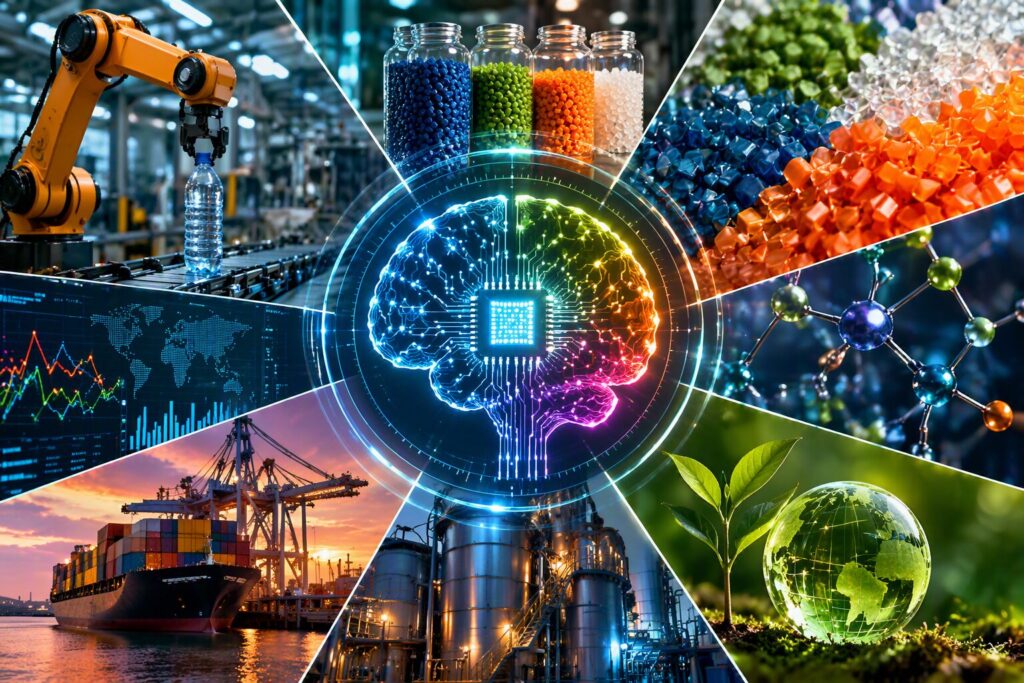
While AI has attracted significant attention across nearly every industry, its real-world impact on plastics, chemicals, and raw materials is becoming increasingly clear. From improving supply chain visibility to accelerating product development, AI is helping companies make smarter, faster, and more informed decisions.
Smarter Supply Chain Management
One of the biggest applications of AI in the plastics industry is supply chain optimization.
Global supply chains have become more complex due to geopolitical uncertainty, fluctuating demand, transportation challenges, and changing regulations. AI helps organizations analyze massive amounts of data to identify trends, predict disruptions, and optimize inventory levels.
For distributors, compounders, and manufacturers, this means:
- Better inventory planning
- Reduced stockouts
- Improved forecasting accuracy
- Faster response to market disruptions
- Enhanced visibility across global operations
Rather than reacting to supply chain issues after they occur, companies can proactively identify and address potential risks.
Accelerating Material Selection and Product Development
Selecting the right material for an application can be a time-consuming process.
Engineers often evaluate multiple resin families, fillers, additives, and processing variables before identifying the best solution. AI is helping streamline this process by analyzing historical performance data, material properties, application requirements, and processing conditions.
As AI tools continue to evolve, companies will be able to:
- Reduce development timelines
- Improve material recommendations
- Identify alternative materials more quickly
- Increase formulation efficiency
- Accelerate innovation
This creates significant opportunities across automotive, packaging, electronics, consumer goods, and industrial applications.
Predictive Analytics for Manufacturing
Manufacturers are increasingly using AI-driven analytics to improve operational efficiency.
Machine learning algorithms can analyze production data in real time to identify patterns that may indicate quality issues, process inefficiencies, or equipment failure.
Benefits include:
- Reduced downtime
- Improved product quality
- Lower operating costs
- Increased production efficiency
- Better yield management
Instead of relying solely on historical reports, manufacturers gain actionable insights while production is still occurring.
Supporting Sustainability Initiatives
Sustainability remains one of the most important priorities in the plastics industry.
AI is helping organizations evaluate environmental data, identify opportunities to reduce waste, improve recycling programs, and optimize resource usage.
Potential applications include:
- Improving recycled content utilization
- Optimizing transportation routes
- Reducing energy consumption
- Tracking carbon footprint metrics
- Supporting circular economy initiatives
As sustainability reporting requirements continue to expand, AI can help companies collect and analyze the data needed to improve environmental performance.
Enhancing Market Intelligence
The materials industry produces enormous amounts of data from customers, suppliers, markets, and manufacturing operations.
AI tools can analyze this information to uncover emerging trends, identify new opportunities, and provide deeper business insights.
Organizations can use AI to:
- Track industry trends
- Monitor market activity
- Analyze customer demand
- Evaluate competitive dynamics
- Improve strategic planning
The result is faster decision-making and a stronger ability to adapt to changing market conditions.
The Human Element Still Matters
Despite its capabilities, AI is not replacing technical expertise.
Successful organizations combine AI-powered insights with industry knowledge, application expertise, engineering experience, and strong customer relationships.
In the plastics and raw materials industry, the companies that will benefit most from AI are those that use technology to enhance—not replace—the expertise of their people.
Looking Ahead
The future of the plastics industry will be increasingly data-driven. Companies that embrace AI will gain advantages in forecasting, supply chain management, manufacturing efficiency, sustainability, and market intelligence.
As the technology continues to evolve, the greatest opportunities will emerge at the intersection of digital innovation and material expertise.
At Mitsui Plastics, we see AI as another tool that helps businesses make better decisions, improve operational performance, and uncover new opportunities across the global materials value chain.
The question is no longer whether AI will impact the plastics industry—the question is how quickly organizations will adopt it.