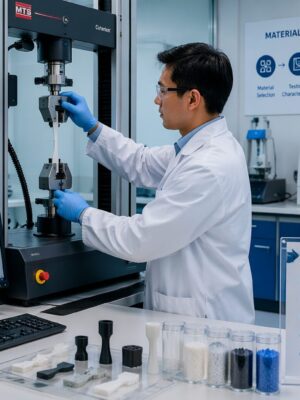
What to Look for in Durable Polymer Compounds
What to Look for in Durable Polymer Compounds
What Makes a Polymer Compound Truly Durable?
When evaluating materials for demanding applications, durability is often the difference between a product that performs reliably for years and one that fails prematurely. Engineers and sourcing teams frequently focus on initial mechanical properties, but long-term performance is determined by a broader range of factors.
Whether you’re designing automotive components, industrial equipment, consumer products, or electrical housings, choosing the right custom polymer compounds can significantly extend product life, reduce maintenance costs, and improve overall reliability.
At Mitsui Plastics, Inc., we help manufacturers identify and develop polymer solutions engineered for long-term success across diverse industries, from automotive and industrial markets to packaging and consumer applications. Our materials portfolio includes engineering resins, impact modifiers, functional fillers, custom masterbatches, and specialty additives designed to improve durability and performance.
Durability Starts with Understanding the Application
Before comparing material data sheets, it is important to understand the actual conditions a part will encounter throughout its service life.
Questions to consider include:
- Will the part face repeated impact or vibration?
- Is it exposed to chemicals, oils, or cleaning agents?
- Will it experience temperature cycling?
- Is UV exposure a concern?
- Does dimensional stability affect assembly or performance?
- Will the component experience wear, friction, or repeated movement?
The answers help determine which material properties should receive the highest priority during the material selection process.
1. Mechanical Strength Retention Over Time
Many materials perform well when newly molded. The real challenge is maintaining performance after months or years of use.
Evaluate:
- Tensile strength retention
- Flexural modulus retention
- Impact resistance retention
- Fatigue resistance
A durable compound should maintain critical mechanical properties even after environmental exposure, thermal cycling, or repeated loading.
This is particularly important in industrial polymer applications where components may operate continuously under demanding conditions.
2. Dimensional Stability
Dimensional stability is often overlooked until problems begin appearing in production or the field.
Even small dimensional changes can affect:
- Fit and assembly
- Connector engagement
- Bearing clearances
- Gear alignment
- Retention force
- Noise and vibration characteristics
Moisture absorption is a common contributor to dimensional change in many engineering polymers. Materials with lower moisture uptake can help maintain part consistency and improve long-term reliability. Internal evaluations of engineering plastics such as polyketone have highlighted the importance of dimensional stability for precision molded components, connectors, housings, gears, and sliding applications.
For applications requiring tight tolerances, dimensional stability should be a key factor in polymer engineering decisions.
3. Chemical Resistance
Many failures occur because a material encounters chemicals that were not considered during the design phase.
Potential exposures include:
- Oils and lubricants
- Cleaning solutions
- Fuels
- Solvents
- Industrial chemicals
- Food processing compounds
Poor chemical resistance can lead to cracking, swelling, discoloration, or loss of mechanical properties.
When evaluating custom polymer compounds, understand not only what chemicals the part may contact today, but future environmental conditions as well.
4. Impact Resistance and Toughness
Durability often means surviving unexpected abuse.
Impacts can come from:
- Product handling
- Drops
- Vibration
- Tool strikes
- Transportation
- Equipment operation
A material that combines stiffness with toughness can improve product lifespan while reducing field failures and warranty claims.
Many applications benefit from the incorporation of impact modifiers or elastomer technologies that enhance toughness without sacrificing other critical performance requirements. Mitsui Plastics offers a range of impact modifiers and specialty materials designed to enhance toughness and durability across polymer systems.
5. Wear and Abrasion Resistance
Parts that slide, rotate, or rub against other surfaces require careful consideration of wear behavior.
Common examples include:
- Gears
- Bearings
- Rollers
- Conveyor components
- Bushings
- Moving assemblies
Excessive wear can create dimensional changes, increased friction, noise issues, or complete component failure.
Materials with strong wear performance and low friction characteristics can extend operating life significantly, particularly in industrial environments.
6. Thermal Stability
Temperature affects nearly every aspect of polymer material performance.
Consider:
- Continuous operating temperature
- Intermittent temperature spikes
- Thermal cycling
- Heat aging
A compound that performs well at room temperature may lose strength, become brittle, or deform under elevated temperatures.
Likewise, materials intended for cold environments should maintain impact resistance and toughness when temperatures drop.
Thermal stability becomes especially important for automotive, electrical, and industrial applications where temperature fluctuations are unavoidable.
7. UV and Weather Resistance
Outdoor applications require more than basic mechanical performance.
Sunlight, moisture, and weather exposure can cause:
- Surface cracking
- Color fading
- Embrittlement
- Loss of impact strength
- Reduced service life
Weather-resistant additives and stabilization packages can dramatically improve long-term outdoor durability.
When evaluating custom polymer compounds, consider total environmental exposure rather than only indoor laboratory conditions.
8. Processing Consistency
A highly durable material is only valuable if it can be processed consistently.
Reliable manufacturing performance contributes directly to product quality by helping minimize:
- Voids
- Internal stresses
- Inconsistent part weights
- Surface defects
- Property variation
Strong processability often leads to better part-to-part consistency, which ultimately supports long-term durability in the field.
9. Functional Additives That Improve Durability
A carefully designed compound can incorporate additives that enhance performance beyond the base polymer.
Examples include:
- Glass fiber reinforcements
- Carbon fiber reinforcements
- Heat stabilizers
- Impact modifiers
- Flame retardants
- Coupling agents
- Anti-static additives
- UV stabilizers
Mitsui Plastics supplies a broad portfolio of functional fillers, modifiers, and polymer additives that can be combined into application-specific solutions to improve durability, processability, and performance.
The Value of Custom Polymer Compounds
Off-the-shelf resins can solve many challenges, but demanding applications often require a more tailored approach.
Custom polymer compounds enable engineers to optimize multiple performance characteristics simultaneously, including:
- Mechanical strength
- Impact resistance
- Chemical resistance
- Dimensional stability
- Thermal performance
- Wear resistance
- Sustainability requirements
Rather than compromising between conflicting requirements, custom formulations provide a balanced solution designed specifically for the application.
Partner with Mitsui Plastics for Long-Term Performance
Selecting materials based solely on initial mechanical properties can lead to costly failures later. True durability requires a thorough understanding of environmental conditions, processing requirements, and long-term performance expectations.
At Mitsui Plastics, Inc., we work closely with manufacturers to identify and develop material solutions that meet demanding performance requirements across automotive, industrial, packaging, electronics, and consumer markets. Our expertise in custom polymer compounds, additives, engineering resins, and material development helps customers improve reliability while reducing risk throughout the product lifecycle.
Looking for a durable polymer solution for your next project? Contact us today to discuss your application requirements and discover materials engineered to perform for the long haul.