USMCA 2026 Review: What It Means for North American Supply Chains
USMCA 2026 Review: What It Means for North American Supply Chains
A Critical Moment for Trade in North America
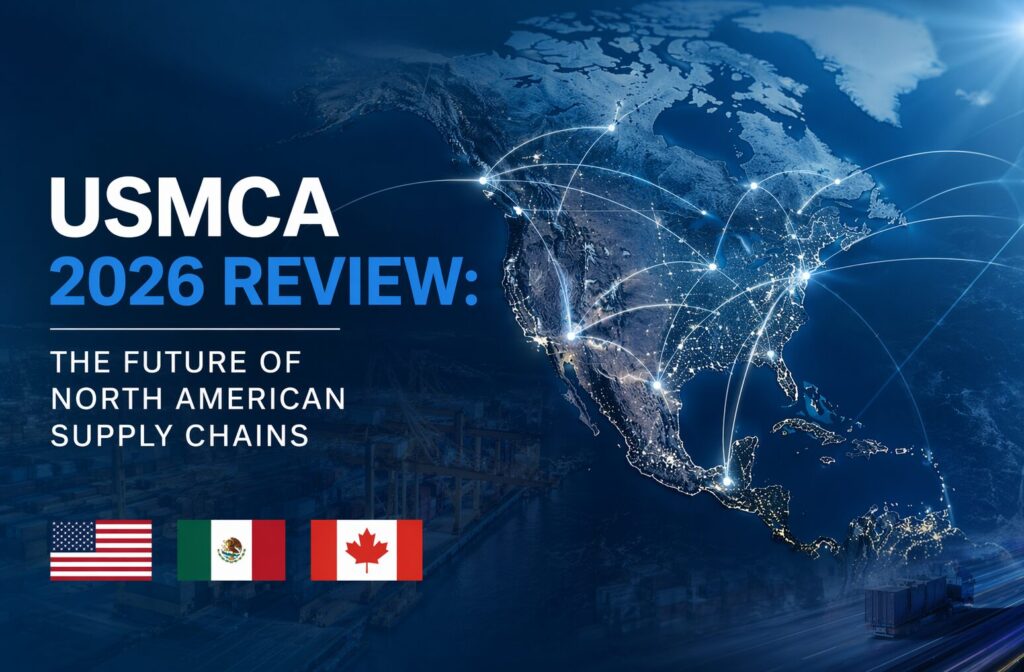
The United States–Mexico–Canada Agreement (USMCA) has entered its first formal joint review in 2026—a milestone that could shape the future of trade across North America for the next decade and beyond.
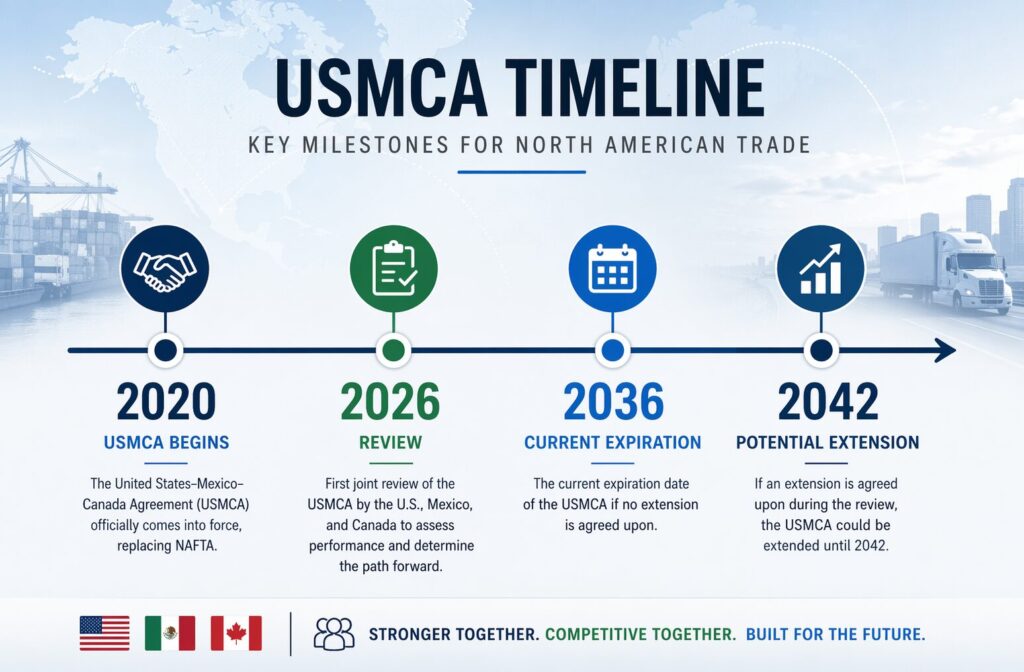
Originally implemented in July 2020 to replace NAFTA, the agreement is now being evaluated by all three member countries to determine whether it should be extended beyond its current 2036 expiration date.
For manufacturers, distributors, and supply chain leaders, this review is more than a policy update—it’s a signal that the dynamics of regional sourcing, compliance, and global trade are evolving in real time.
What Is Being Reviewed—and Why It Matters
Under the USMCA framework, member countries are required to conduct a joint review at least once every six years. The primary objective of the 2026 review is to determine whether to extend the agreement by an additional 16 years.
If an extension is agreed upon this year, the agreement would remain in place until 2042. If not, annual reviews will continue until a consensus is reached or the agreement ultimately expires in 2036.
At this stage, most observers expect negotiations to extend beyond 2026, with discussions likely continuing into 2027 or later.
This uncertainty introduces both risk and opportunity—particularly for businesses that rely on cross-border trade and integrated North American supply chains.
Key Issues Shaping the 2026 Review
The review is centered around several critical areas that could redefine how goods move across the region:
1. Rules of Origin and Manufacturing Requirements
The United States is pushing for stricter rules that would increase North American—and specifically U.S.—content requirements for key industries such as automotive manufacturing.
This signals a broader shift toward regional production and reduced reliance on external supply sources.
2. Supply Chain Security and China Exposure
A major focus of the review is reducing China’s footprint in North American supply chains. Proposed measures include tighter controls on foreign investment, increased tariffs, and stricter enforcement against transshipment practices.
These efforts reflect a growing emphasis on economic security and supply chain resilience.
3. Energy and Investment Policy Alignment
The United States and Canada are seeking greater access to Mexico’s energy sector, while also encouraging policies that support foreign investment and improve market transparency.
This area could significantly impact industries that rely on energy-intensive production or infrastructure.
4. Labor Standards and Regulatory Compliance
Labor enforcement remains a key issue, with continued pressure on Mexico to strengthen labor protections and ensure fair practices across industries.
In parallel, regulatory alignment and rule-of-law considerations are becoming increasingly important to cross-border operations.
5. Agriculture and Market Access
Trade tensions persist in sectors such as dairy and produce, with each country seeking concessions that could affect pricing, availability, and market access.
While sector-specific, these issues highlight broader challenges in balancing domestic protection with regional cooperation.
What This Means for Supply Chains
The USMCA review underscores a clear trend:
trade policy is becoming a central driver of supply chain strategy.
Manufacturers and suppliers operating in North America are likely to face:
- Increased pressure to localize sourcing and production
- Greater regulatory complexity across borders
- Potential cost shifts tied to compliance and tariffs
- Heightened scrutiny of supplier networks and origin transparency
At the same time, these changes create opportunities for businesses that can adapt quickly—particularly those that invest in regional capabilities and flexible sourcing strategies.
Strategic Takeaways for Businesses
To navigate the evolving USMCA landscape, companies should consider:
1. Strengthening Regional Supply Chains
Evaluate opportunities to shift sourcing and production closer to North American markets to meet potential rule changes and mitigate risk.
2. Increasing Supply Chain Visibility
Ensure greater transparency across supplier networks, including origin tracking and compliance documentation.
3. Monitoring Policy Developments Closely
Stay informed on ongoing negotiations and emerging regulatory requirements, as outcomes may shift over time.
4. Building Flexibility into Operations
Diversify supplier bases and logistics strategies to respond quickly to policy or market changes.
Looking Ahead
While the outcome of the USMCA review remains uncertain, one thing is clear:
the structure of North American trade is evolving.
Even if a full extension is not reached in 2026, continued negotiations and annual reviews will keep supply chain considerations at the forefront of the conversation.
For companies operating across the U.S., Mexico, and Canada, this is a pivotal moment to reassess strategy, strengthen resilience, and align operations with the future direction of regional trade.
Conclusion
The 2026 USMCA Review is not just a regulatory event—it is a reflection of broader economic shifts shaping global trade.
Organizations that proactively adapt to these changes—by strengthening regional capabilities, improving visibility, and staying ahead of policy developments—will be best positioned to navigate uncertainty and capture long-term value.