Why Plastic Material Qualification Takes So Long
If you work in manufacturing procurement, you know that qualifying a new plastic raw material can take much longer than expected. What looks like a simple switch on paper often turns into months of testing, documentation, and back-and-forth with suppliers. This article breaks down the main factors behind those delays and offers practical guidance for your next qualification project.
Mitsui Plastics, Inc. helps procurement and engineering teams navigate material qualification more efficiently by connecting global sourcing expertise with hands-on technical support. Understanding where bottlenecks occur puts you in a stronger position to plan timelines and avoid surprises.
Key Takeaways: Why Plastic Material Qualification Takes So Long
- Technical testing and validation requirements make up a significant portion of qualification timelines for any new plastic material.
- Regulatory compliance—especially for food-contact or medical applications—adds layers of documentation and approval steps.
- Quality control verification often requires multiple production runs before a material earns full approval.
- Single-source or sole-source suppliers create bottlenecks when capacity or technical support becomes limited.
- Mitsui Plastics connects you with global sourcing options and technical expertise to shorten your qualification cycles.
What Is Material Qualification in Plastics Manufacturing?
Material qualification is the process of confirming that a new plastic raw material meets all performance, regulatory, and quality standards required for your application. This involves testing the material against your specifications, validating production processes, and documenting every step for traceability.
For many manufacturers, the qualification process also includes internal engineering reviews, pilot production runs, and cross-functional sign-offs. Each stage adds time, but skipping steps can lead to costly recalls or production disruptions down the line.
Why Does Technical Testing Take So Long?
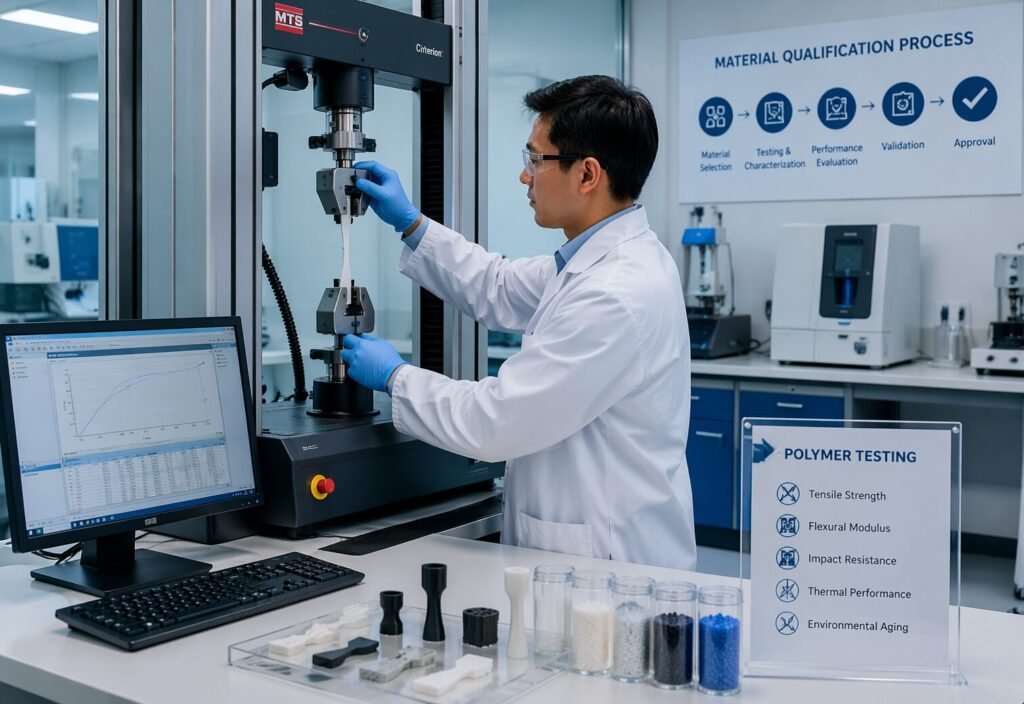
New plastic materials must pass a series of tests to verify their mechanical, thermal, and chemical properties. These tests confirm that the material will perform consistently under real-world conditions in your end product.
Testing protocols often include tensile strength, impact resistance, heat deflection temperature, and chemical exposure evaluations. According to the University of Michigan’s polymer quality control guide, these tests ensure production runs meet specifications. Each test requires sample preparation, equipment calibration, and data analysis—all of which add days or weeks to your timeline.
If initial results fall outside acceptable ranges, your team must investigate the root cause and potentially retest. This iterative process is one of the biggest contributors to extended qualification timelines.
How Do Regulatory Requirements Affect Qualification Timelines?
Regulatory compliance creates some of the most significant delays in material qualification, especially for food-contact, medical device, or automotive applications. Agencies like the FDA require rigorous safety assessments before a material can be approved for consumer use.
Documentation requirements vary by industry and region. You may need to submit migration testing data, toxicological evaluations, and environmental impact assessments. Gathering and organizing this information often takes longer than the physical testing itself.
Mitsui Plastics supports your team by staying ahead of regulatory changes and helping you identify materials with established compliance histories. This approach reduces the documentation burden and speeds up your approval process.
What Role Does Supplier Qualification Play?
Qualifying the material is only part of the equation—you also need to qualify the supplier. This involves auditing their manufacturing processes, reviewing quality management certifications, and confirming their capacity to meet your volume requirements.
Many critical raw materials come from sole-source or single-source suppliers. Industry research shows that over 95% of critical materials in some manufacturing sectors come from just one or two providers. If your primary supplier faces a disruption, qualifying an alternative can take six months or more.
Building relationships with multiple qualified suppliers upfront helps reduce this risk. Mitsui Plastics offers access to a global network of material suppliers, giving you more options when you need to qualify alternatives quickly.
How Does Quality Control Verification Extend Timelines?
Even after a material passes laboratory testing, quality control teams typically require production-scale validation. This means running trial batches through your actual manufacturing equipment to confirm consistent performance.
Production trials reveal issues that laboratory tests may miss, such as processing inconsistencies or equipment compatibility problems. Your quality team will likely require several successful production runs before granting full approval.
Documenting these trials for traceability adds another layer of administrative work. Each lot needs material certifications, inspection reports, and test records that link back to the original qualification data.
What Supply Chain Factors Contribute to Delays?
Global supply chain complexity introduces variables that can extend qualification timelines. Transportation delays, raw material availability, and geopolitical factors all affect how quickly you can obtain samples and production quantities.
Recent industry reports highlight how logistics disruptions, capacity constraints, and price volatility continue to affect plastic raw material sourcing. When your preferred material becomes unavailable, the qualification clock resets with each new alternative you evaluate.
Mitsui Plastics links global resources with local market knowledge to help you anticipate sourcing challenges before they derail your projects. Having backup materials already in the qualification pipeline keeps your production schedule on track.
How Can You Shorten Material Qualification Cycles?
Start by engaging your material supplier early in the design process. Suppliers with strong technical support capabilities can help you select materials that already meet your performance and regulatory requirements, reducing the scope of qualification testing.
Consider qualifying multiple materials simultaneously rather than sequentially. This parallel approach requires more upfront resources but creates flexibility when supply chain issues arise.
Maintain detailed qualification records for future reference. If you need to re-qualify a material or switch to an alternative, historical data accelerates the process significantly.
FAQs about Why Plastic Material Qualification Takes So Long
What is the typical timeline for qualifying a new plastic material?
Most material qualifications take three to twelve months, depending on your industry’s regulatory requirements and testing complexity. Food-contact and medical applications typically require longer timelines due to additional compliance documentation.
Can Mitsui Plastics help speed up my qualification process?
Yes. Mitsui Plastics connects you with pre-qualified materials that have established compliance histories and proven performance data. This approach reduces testing time and documentation requirements for your team.
Why do regulatory approvals take so long for plastic materials?
Regulatory agencies require extensive safety data, including migration testing and toxicological evaluations. Gathering, organizing, and submitting this documentation often takes longer than the physical testing itself.
How does supplier qualification affect overall timelines?
Qualifying a new supplier involves auditing their processes, reviewing certifications, and validating their production capacity. This can add several months to your timeline, especially if the supplier is located overseas.
What can I do to reduce qualification delays?
Engage suppliers early, qualify multiple materials in parallel, and maintain detailed records. Mitsui Plastics offers technical support and global sourcing options that help you build a more resilient qualification strategy from the start.